


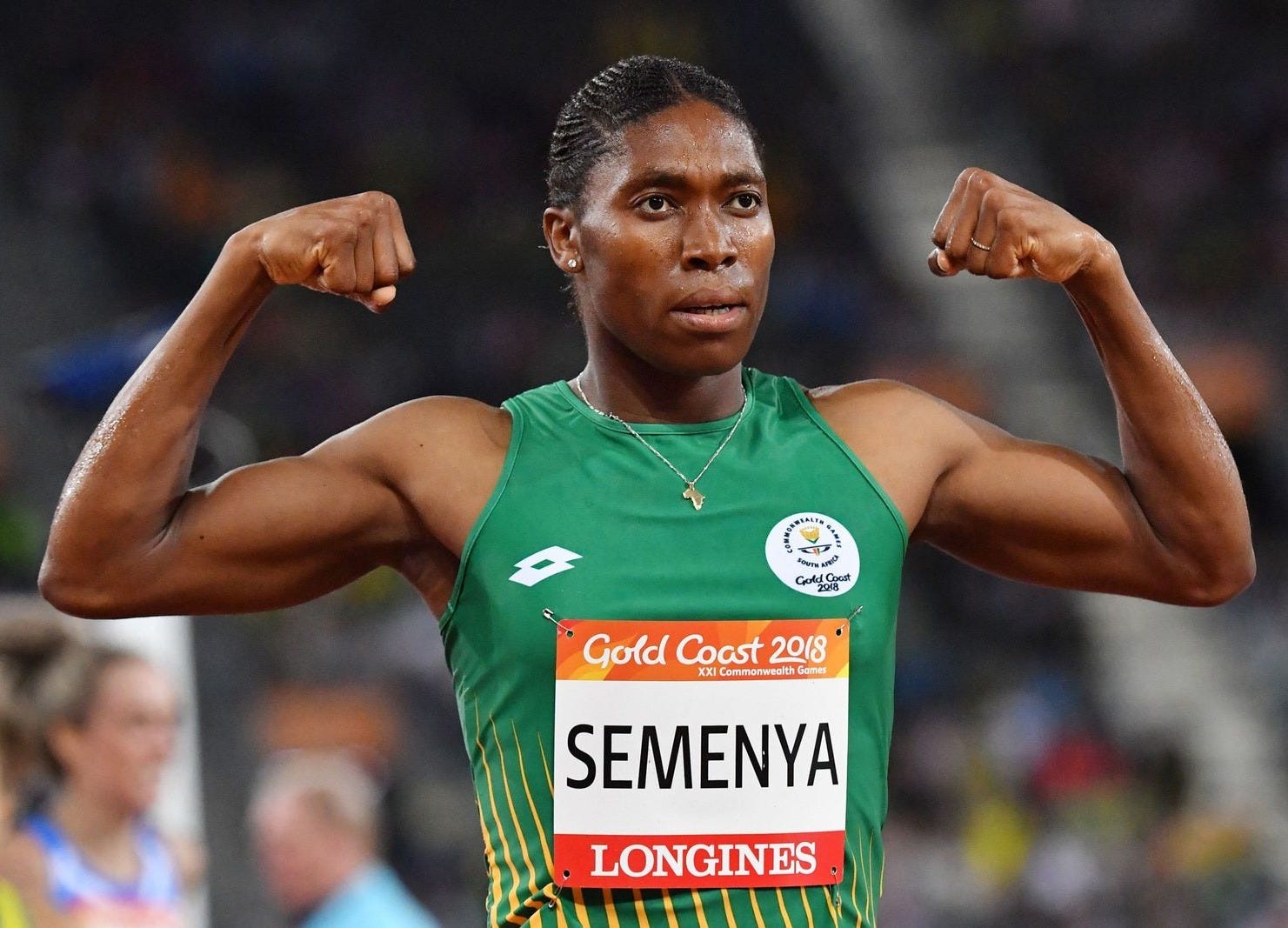
He pushes his feelings down and hardens himself to the world. He never cries or shows weakness. Instead, he is aggressive, callous, constantly competitive, chasing status and wealth at the expense of others. He devalues femininity and ‘women’s work’, withholds all emotions except anger, avoids intimacy, and asserts himself through physical superiority.
In normal men, these traits — hyper-independence, risk-taking, physical and verbal confrontation, a defining of the self through strength and victory — are the textbook pathology of the ‘toxic male’.
This phrase, ‘toxic masculinity’, began as a critique of the unhealthy standards and social pressures that made men unhappy. Today, it names the power men have to make other people unhappy.
The Race To Be Myself glories in making other people, especially female athletes, unhappy. According to his own book, Mogkadi Caster Semenya is the most toxic sort of male one could ever regret meeting.
Semenya is not a normal man. Born with a disorder of sexual development (DSD) that no one recognized until he was 19 years old, Semenya insists that he is a woman, so that it is unfair to exclude him from sports for women.
His autobiography however is a perfect study in hyper-masculine toxicity. Whereas ‘toxic male’ is too often an insult aimed at men for normal behavior, it absolutely describes the self-description of Caster Semenya.
“I let my fists finish the conversation”, Semenya says about the first of many fistfights he had, or wanted to have. “I’m not particularly proud of the ass beatings I handed out,” he lies, because if that was true he would not brag so much in this book about how many fights he got into, or tried to start.
I suspect that Semenya never picked a fight with any boy or man stronger than himself. Frankly, he needs physical defeat more desperately than any grown man alive. Being forced to ‘tap out’ would have broken down the immense ego that leaps off the pages. Men should have set him straight before he stole medals from women.
The failure to treat him as a boy, and physically conflict with him like any other boy, is the supreme failing of the boys in his youth. “My male cousins were the ones who taught me how to fight like a boy — we’d roughhouse for hours”, Semenya writes.
It does not occur to him that his male cousins had no incentive to win any of these fights with what they perceived to be a girl, that they would have been tougher on him had they understood him as a boy.
Indeed, inability to see himself through the eyes of other people is a consistent theme of this book. “I was a woman”, he insists of his examination by doctors. “I didn’t care about their Xs and Ys and what their manmade data and machines showed. I sit down to pee just like their mothers.”
Semenya insists that “I had to go through this bullshit because I didn’t look how they thought girls should look.” He does not allow that anyone might object to competing with a man just because his groin looks like a woman’s groin.
His disbelief in his own maleness is an incredible act of rationalization. Semenya refused to wear a dress when he was “5 or 6”, preferred the singing of boys to girls, hated romance films, “loved movies about gangsters, drug lords, serial killers, and especially about soldiers and war.” He was all boy.
As puberty hit, Semenya’s voice got deeper, his body got more muscular, girls found him attractive, and “it dawned on me that I didn’t want to hit girls because I actually just wanted to kiss them.” He never got his period, but instead of being alarmed or curious about this, Semenya simply shrugged it off. He did not want to know.
